
EXPLORE SAMOS ISLAND
Discover the natural beauty, ancient wonders, and pristine beaches that make Samos a unique destination in the Aegean.
Beaches Near Villa Karlovasi
Tsamadou Beach
Distance from Villa Karlovasi: 40km (accessible via Kokkari)
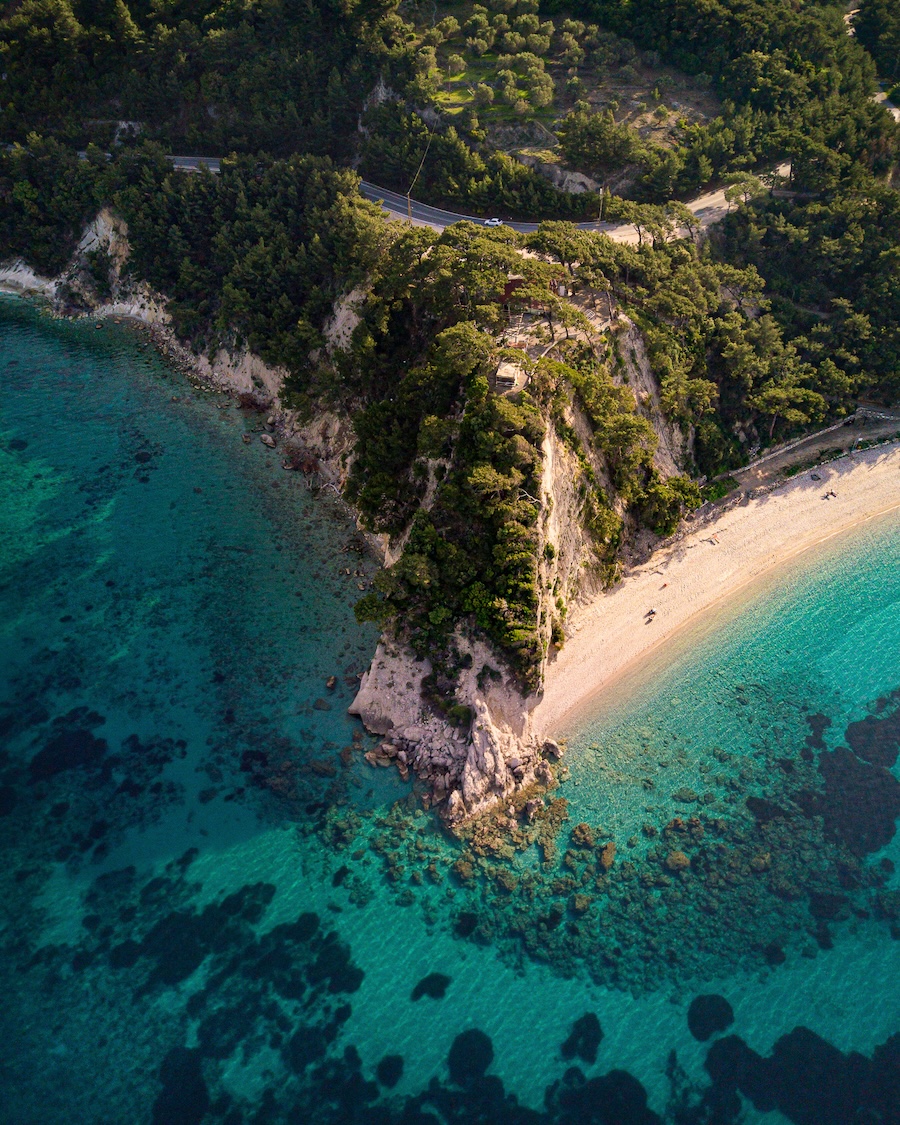
Considered one of Samos’ most beautiful beaches, Tsamadou is a lovely bay surrounded by dense greenery with stunning blue-green waters. Located about 3km from Kokkari village, this soft pebble beach is reached by a small path from the main road.
The beach is well-organized with sunbeds and umbrellas, and several delicious tavernas and beach cafeterias line the shore. The crystal-clear waters and lush surroundings create an ideal spot for relaxation, though the bay can experience waves on windy days.
Special note: Tsamadou is Samos’ only official nudist beach – the right section (as you descend the path) is designated for naturist use.
Best for: Beach lovers, couples, naturists
Facilities: Sunbeds, umbrellas, tavernas, beach bars
Potami Beach
Distance from Villa Karlovasi: 2km west (10 minutes by car)
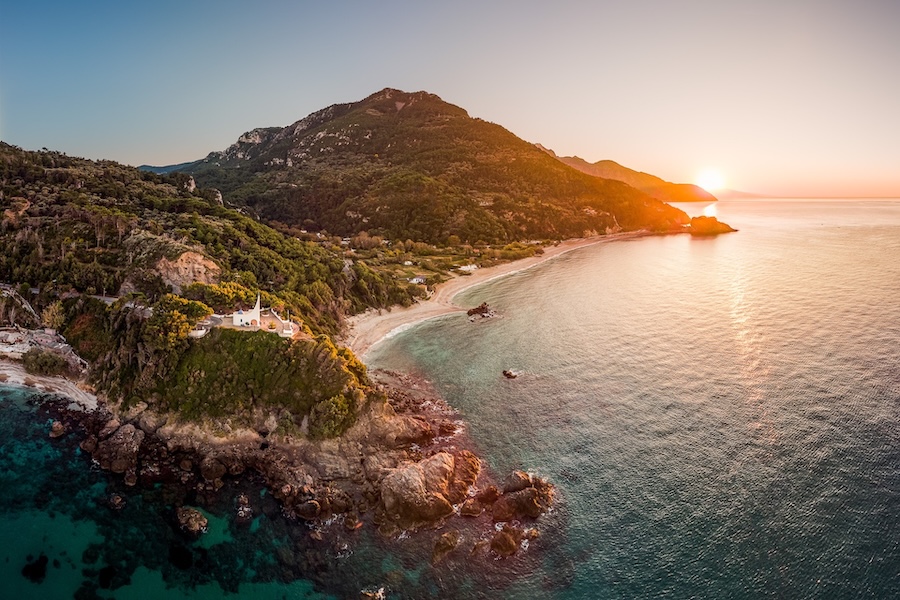
A magnificent pebble beach with crystal-clear waters, Potami sits on Samos’ northeastern coast in a stunning natural setting. Steep cliffs covered in lush vegetation and towering pine trees frame this beautiful beach, creating a breathtaking landscape.
The beach offers organized facilities including umbrellas, sunbeds, and a beach bar serving snacks and cold drinks. While the waters are somewhat deep, the entire setting is spectacular – the vivid blue sea against the dramatic backdrop of cliffs and greenery makes Potami one of the most scenic beaches near Karlovasi.
Best for: Families, swimmers, nature lovers
Facilities: Sunbeds, umbrellas, beach bar
Note: Close to Agios Ioannis Monastery
Ancient Sites & Archaeological Treasures
Eupalinian Tunnel (Tunnel of Eupalinos)
Distance from Villa Karlovasi: Near Pythagoreio (50 minutes)
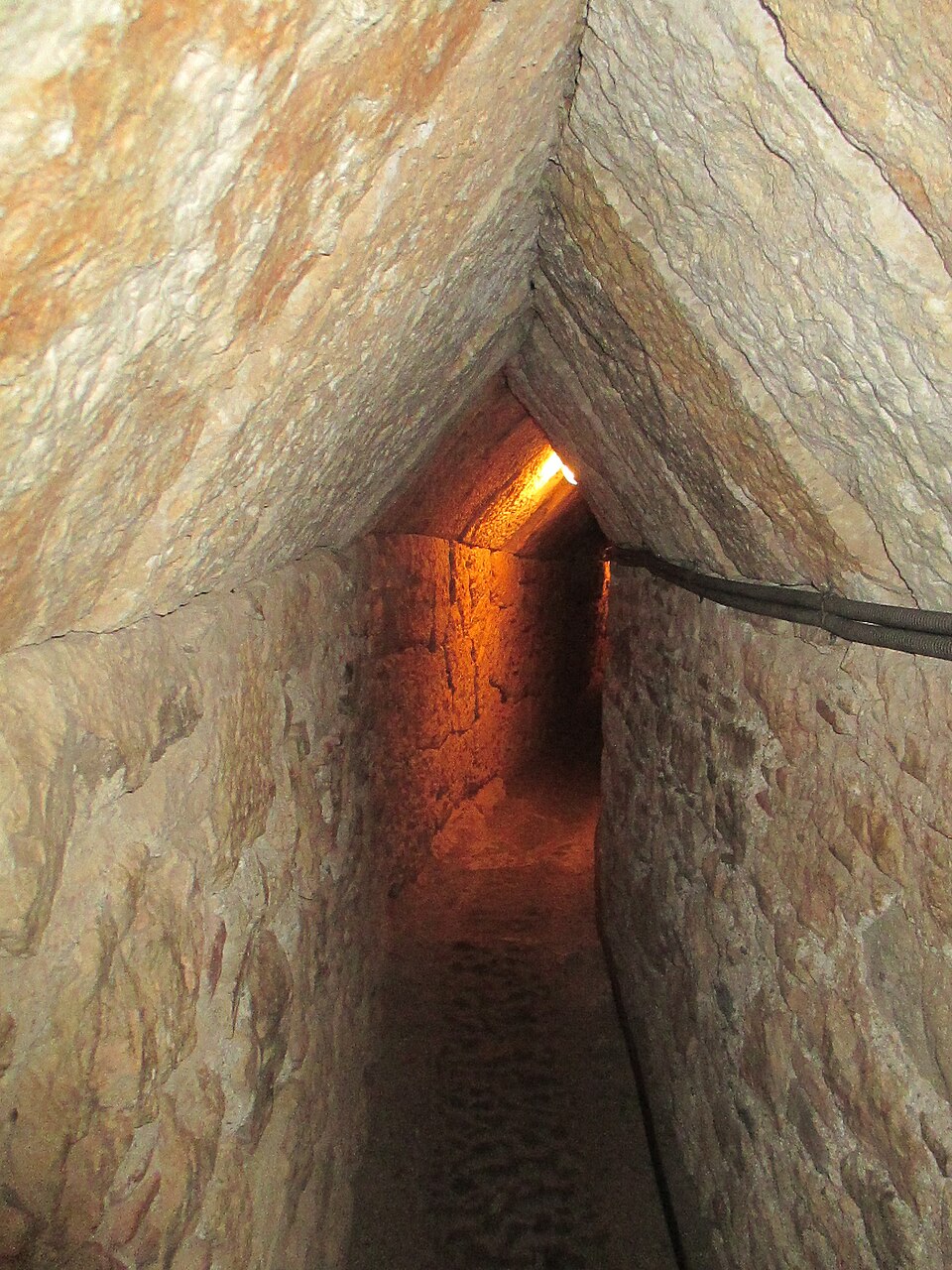
An extraordinary feat of ancient engineering, the Eupalinian Aqueduct was constructed in the 6th century BC to supply fresh water to ancient Samos (modern Pythagoreio) from springs in Agiades village. Designed by architect Eupalinos of Megara under orders from the tyrant Polycrates, this innovative marvel took ten years to complete and functioned successfully for 1,100 years.
The engineering wonder: The tunnel was dug simultaneously from both the north and south sides – Herodotus called it a “double-mouthed tunnel” – and the two teams met precisely in the middle, an achievement requiring exceptional geometric precision for the era.
The aqueduct system consists of a tunnel (1.8m x 1.8m), a reservoir, and clay pipelines (25cm diameter) for water transport. Its groundbreaking ancient construction techniques earned it inclusion on the UNESCO World Heritage List in 1992.
Excavated by the German Archaeological Institute from 1971-1973, the tunnel was thoroughly studied by Herman Kienast. Today, visitors can explore this remarkable ancient achievement and marvel at the ingenuity of 6th-century BC engineers.
Best for: History enthusiasts, engineering fans, educational visits UNESCO World Heritage Site
Opening hours: Check locally (varies by season)
Heraion – Temple of Hera
Distance from Villa Karlovasi: 17.5km southwest of Samos Town
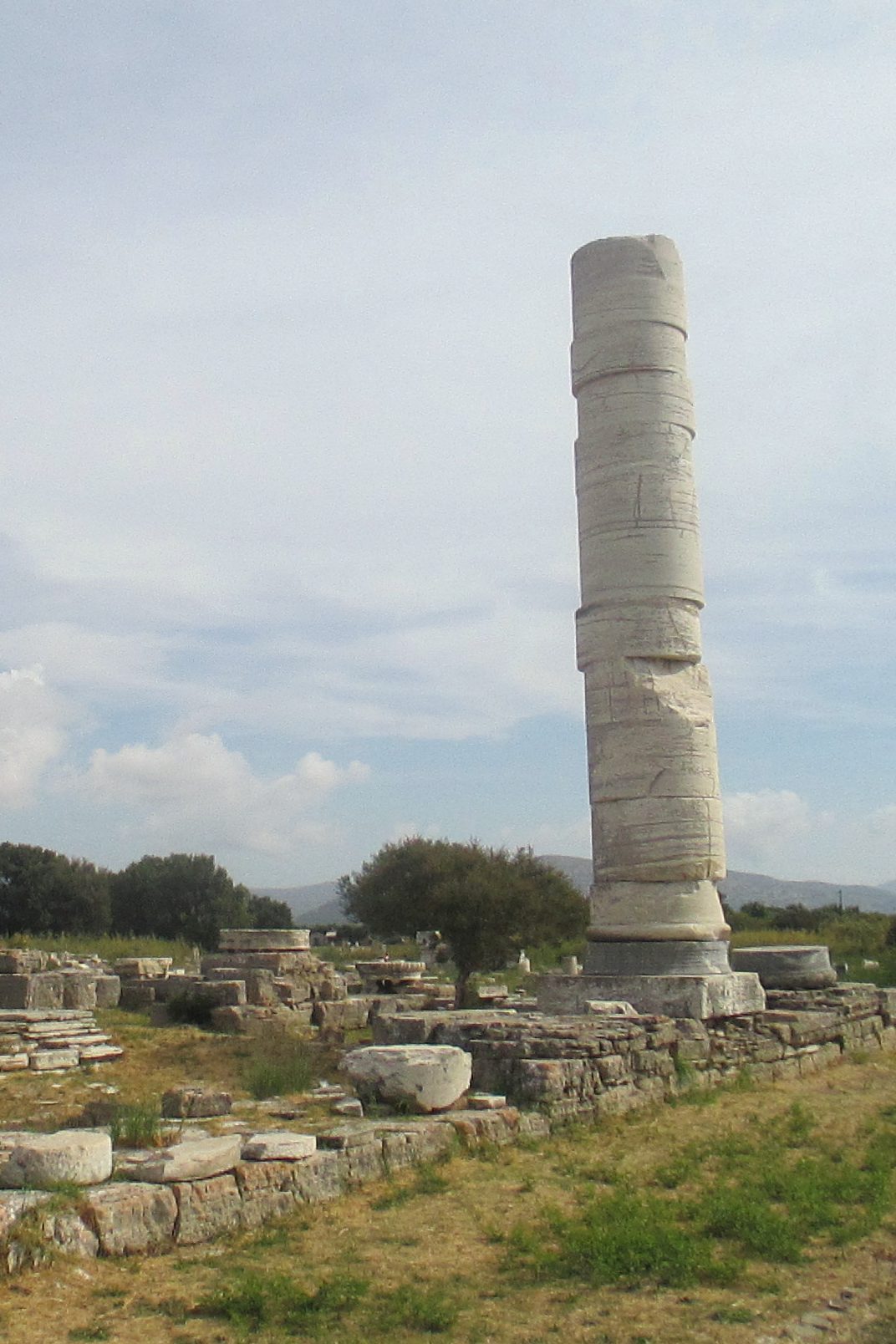
According to legend, the goddess Hera was born and raised on Samos, which explains why her temple at Heraion was the largest in the ancient world. This important archaeological site encompasses the massive Temple of Hera (109m long, 55m wide, 25m tall) – known locally as “Kolona” after the single towering column that remains standing today.
The site includes:
- The grand temple of Hera
- The monumental altar
- The Sacred Road (ancient processional path from Pythagoreio to the temple)
- Artificial Lakes Glyfades (between Pythagoreio and Heraion)
- Sarakinis Tower (1577) on the Heraion plain
- Agios Ioannis and Agios Georgios churches (next to the tower)
- Archaeological remains at Myloi precinct from various historical periods
Nearby beaches: Ireon and Papas beaches for swimming, plus boat-accessible coves including Mylonas, Kyriakou, Kakorema, and Samiopoula island.
Cultural events: In July and August, the “Irea” festival presents ancient theatrical performances.
Best for: History lovers, archaeology enthusiasts, cultural travelers UNESCO World Heritage Site
Pythagoras Cave
Distance from Villa Karlovasi: Mountain location (check locally for access)
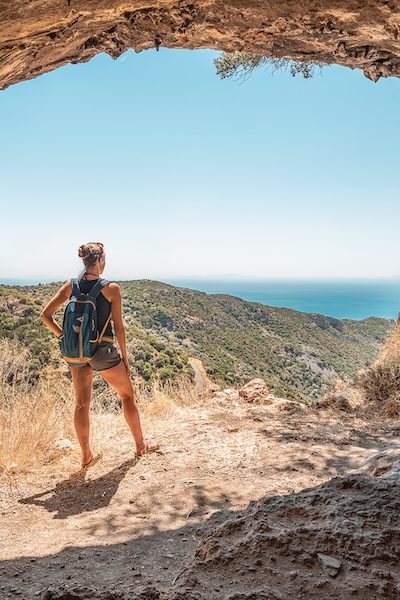
Visit the legendary refuge of Pythagoras – the renowned philosopher, mathematician, astronomer, physician, and musician who lived part of his life in these mountain caves.
The site features two caves and two chapels:
Cave of Santa Maria (Panagia Sarandaskaliotisa): Reached by the main steps, this larger cave extends about 80 meters deep, though visitors can safely walk only 15-20 meters until reaching the holy water source. Pythagoras used this cave for teaching his students and as a water source, but didn’t live here due to its extreme height and steepness on the mountain.
Pythagoras’ Living Cave: Before reaching the first chapel (Saint John), a small path on the right leads to Pythagoras’ actual dwelling cave – where he lived rather than taught. The path is steep, ending under a fig tree; from there, climb 1-2 meters and follow orange spray-painted marks to find the entrance. This cave is more suitable for habitation, being flatter than the teaching cave. It contains three rooms, though only two are accessible to visitors.
Important note: The climb is challenging and steep – suitable for fit visitors comfortable with mountain paths.
Best for: History enthusiasts, adventurous hikers, Pythagoras admirers
Difficulty: Moderate to challenging (steep paths, some climbing required)
Bring: Sturdy shoes, water, flashlight